Let’s get something out of the way right now: if you’re planning a wedding in the Pacific Northwest and you don’t have a rain plan, you’re not being optimistic. You’re being reckless. We say that with love — and with the authority of having photographed over 640 weddings across the greater Seattle and Snohomish County area over 15+ years.
We have documented ceremonies in sideways rain, surprise September downpours, and the kind of persistent mist that makes your hair look like you stuck your finger in an electrical socket. Every single one of those weddings was beautiful. But the ones where the couple had a real, actual, thought-through rain plan? Those were the ones where everyone — couple, guests, vendors — could actually enjoy the day instead of spiraling.
This guide isn’t going to tell you “rain is good luck!” and call it a day. (Though sure, if that helps you sleep at night, go for it.) Instead, we’re going to walk you through the practical, logistical, and emotional reality of planning for rain at your PNW wedding — because the Pacific Northwest doesn’t care about your Pinterest board.


First, Let’s Talk About What PNW Rain Actually Looks Like
People who didn’t grow up here picture rain as a dramatic downpour. That’s not usually what we’re dealing with. Seattle and Snohomish County average about 39 inches of precipitation per year, with the vast majority falling between October and May. July and August are genuinely dry — Seattle averages less than an inch of rain combined across both months. But here’s the thing that trips people up: June. “June-uary” is a real phenomenon. Early June can absolutely deliver gray skies and drizzle, even though the calendar says summer. And September? It’s a gorgeous month for weddings, but the rain starts creeping back in during the second half.
The other thing to understand about PNW rain is that it’s usually not torrential. It’s persistent, misty, and damp. The kind of rain that doesn’t seem like much until you’ve been standing in it for 20 minutes and suddenly your jacket weighs six pounds. This is important context because it changes how you plan. You’re not usually planning for a hurricane. You’re planning for ambient moisture that affects hair, makeup, guest comfort, ground conditions, and — yes — your photos.
Month-by-Month Rainfall Reality Check for PNW Weddings
Here’s a quick reference based on NOAA data for the Seattle area, because you should know what you’re walking into based on your wedding date:
January through March: Peak rain season. Average of 4-5 inches per month. If you’re getting married in these months, you need a fully indoor-capable venue. No hedging, no “but what if it’s nice.” Plan for indoor and be pleasantly surprised.
April and May: Transitional. Rainfall drops to around 2-3 inches per month, but showers are unpredictable. You might get a stunning blue-sky day or three straight days of drizzle. A rain plan isn’t optional here — it’s essential.
June: The wildcard. Average rainfall is about 1.5 inches, but early June can behave like April. The “June gloom” is real, and we’ve photographed plenty of June weddings in overcast drizzle. A rain plan is still strongly recommended.
July and August: Your safest bet. July averages about 0.6 inches of rain, August even less. These are the months where you can reasonably plan a fully outdoor wedding — but even then, having a backup plan is just smart. We’ve seen August rain happen.
September: Beautiful and underrated, but the rain starts returning mid-month. Average rainfall jumps to about 1.5 inches. Early September is usually lovely. Late September is a coin flip.
October through December: You’re back in rain country. 3-6 inches per month. Plan indoor, full stop.

What a Real Rain Plan Actually Looks Like
A real rain plan is not “we’ll figure it out day-of.” A real rain plan is a documented, communicated, budgeted contingency that every single vendor on your team knows about before the wedding week. Here’s what that includes:
A defined decision point. Pick a specific time — usually 48-72 hours before the wedding — when you’ll make the call on whether to execute your rain plan. Check multiple weather sources, talk to your coordinator or day-of planner, and commit. Once the call is made, it’s made. Stop checking the forecast and start executing.
A ceremony backup location. If your ceremony is outdoors, where does it go if it rains? The best venues in Snohomish County have built-in backup spaces — covered pavilions, barns, indoor ceremony rooms. If your venue doesn’t have one, you need to identify one and confirm it with your venue contact in writing. “We can probably move inside” is not a plan. “The ceremony will move to the covered patio with chairs reconfigured in a semi-circle layout, and here’s the floor plan” is a plan.
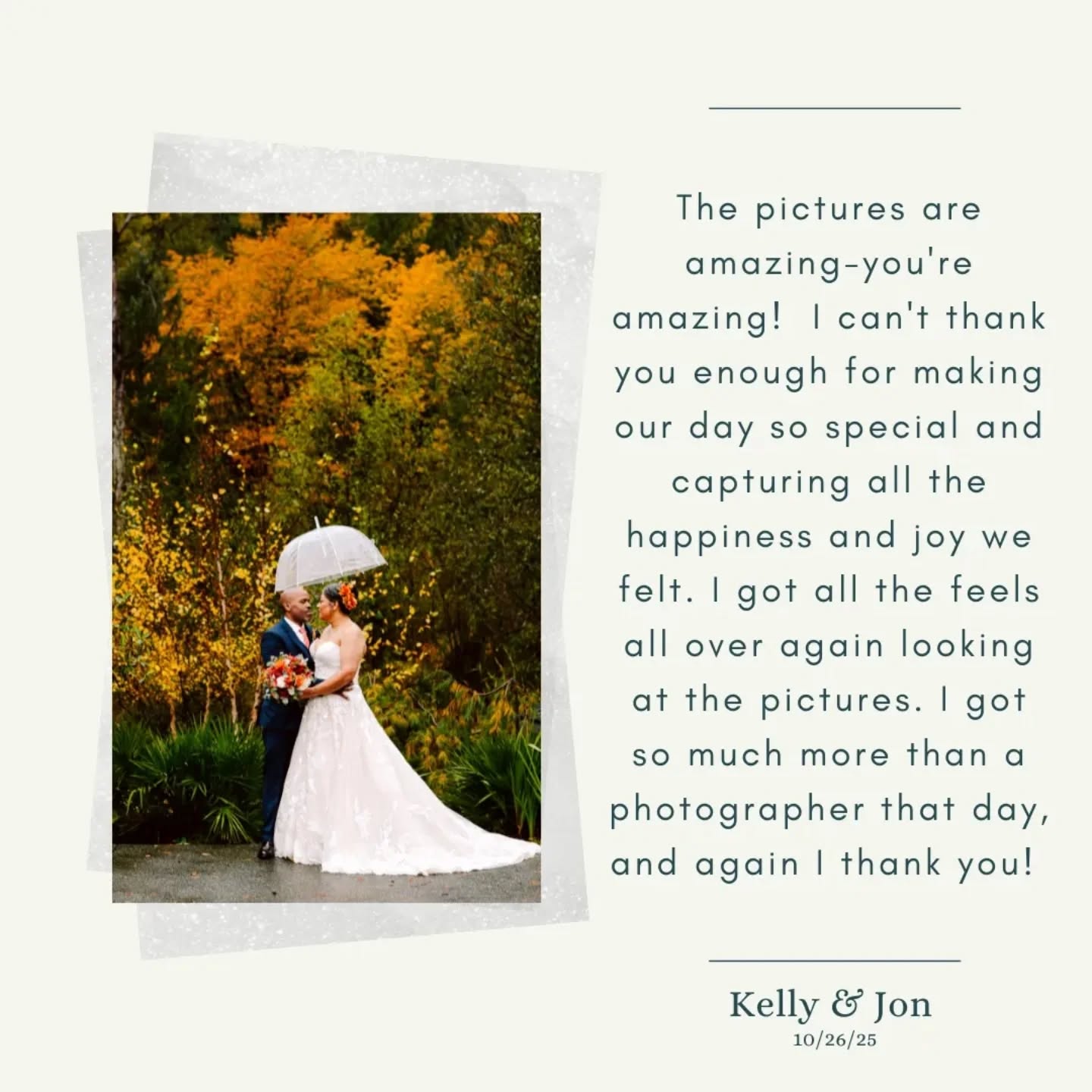
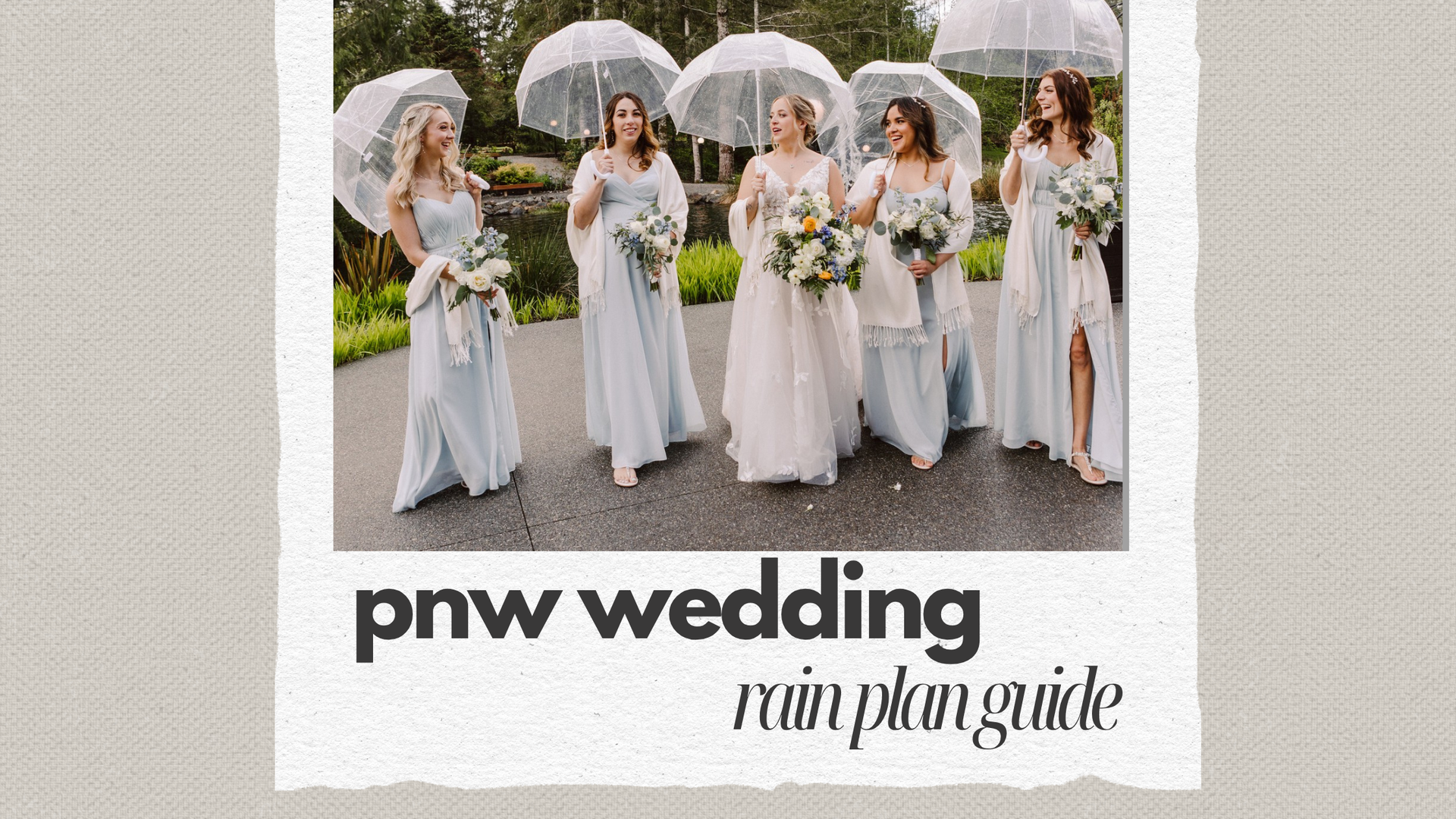
A portrait strategy. This is where your photographer matters enormously. An experienced PNW wedding photographer should have a mental catalog of covered, sheltered, and indoor portrait locations at or near your venue. Covered porches, barn doorways, tree canopy areas, hotel lobbies — we’ve used all of them. Clear umbrellas are great tools for rainy portraits, and overcast light is genuinely excellent for photography. The diffused light eliminates harsh shadows, creates even skin tones, and makes colors pop in a way that direct sunlight can’t. So when we tell you that cloudy days can produce stunning portraits, we’re not blowing sunshine (pun intended) — it’s the actual physics of light.


A guest communication plan. If rain is going to significantly change the logistics of your wedding — different ceremony location, parking changes, need for jackets or umbrellas — tell your guests. Update your wedding website, send a group text, have your wedding party spread the word. Your guests will be grateful for the heads-up rather than showing up in stilettos to a muddy field.
A vendor notification protocol. Every vendor should know who to contact for weather updates and plan changes. Your photographer, DJ, florist, caterer, officiant — they all need to know the rain plan and when the decision will be communicated.
The Gear and Supplies You Actually Need
Skip the cheap folding umbrellas from the dollar store. Here’s what actually works:
- Clear bubble umbrellas. These are the gold standard for wedding rain gear. They don’t cast shadows on faces in photos, they look intentional rather than like an afterthought, and they’re sturdy enough to handle PNW wind. Buy them in bulk from Amazon — you can get packs of 12 for around $40-60. Get enough for your wedding party at minimum, plus a few extras for family.
- A pair of waterproof boots or rain-friendly shoes for the couple. You don’t have to wear them all day, but having them for portraits or ground that’s gotten soft is a game-changer. Hunter boots under a wedding gown look great. We’ve photographed it dozens of times.
- Towels. Seriously. Have a stash of clean towels available for wiping down chairs, blotting faces, drying off bouquets. Your coordinator or a designated friend should have them at the ready.
- A garment steamer. Humidity can wrinkle fabric, and a quick steam touch-up before the ceremony can make a real difference in how attire photographs.
- Also a hair dryer – it’s super useful for getting rain spots off of clothing.
- Extra hairspray and a touch-up kit for the couple and wedding party. Humidity is the enemy of carefully styled hair. Talk to your hair stylist about humidity-resistant styling and products.

How Rain Affects Your Venue Choice
This is where we get really practical. If you’re still choosing a venue and you know your wedding will be during a month with meaningful rain probability, here’s what to prioritize:
Indoor/outdoor flex venues are the gold standard. Many Snohomish County wedding venues are built with PNW weather in mind. Barns with covered entrances, estates with both indoor ceremony and reception spaces, and venues with permanent covered outdoor structures give you the most flexibility. When you tour a venue, ask specifically: “What happens if it rains?” and “Can I see the indoor ceremony backup space?” If the venue coordinator gets vague, that’s a red flag.
Tent rentals are an option but not a cheap one. A quality tent for a ceremony or reception in the PNW can run $2,000-$10,000+ depending on size, sidewalls, flooring, and heating. If you’re considering a tent, get quotes early — tent rental companies book up fast during wedding season. Also factor in the logistics: tent installation usually requires advance setup time, flat ground, and potentially a permit depending on your municipality.


Fully outdoor venues without a backup are a gamble, even in July and August. We’ve photographed at gorgeous venues with zero indoor options, and when the weather cooperates, they’re spectacular. When it doesn’t? It’s stressful for everyone. If you go this route, make sure your rain plan is airtight and everyone is on board with the possibility of getting a little damp.
Pay attention to ground conditions. Some venues have gravel paths or concrete patios that hold up well in rain. Others have grass fields that turn into mud pits after an hour of rain. Ask about drainage and ground conditions during your venue tour, and consider whether your venue will need flooring or ground cover in wet weather.
The Photography Angle: Why Overcast Days Can Be Your Best Friend
We’ve been photographing weddings in the PNW for over 15 years, and we can say this with total confidence: some of our most stunning work has been on overcast and rainy days. Here’s why.
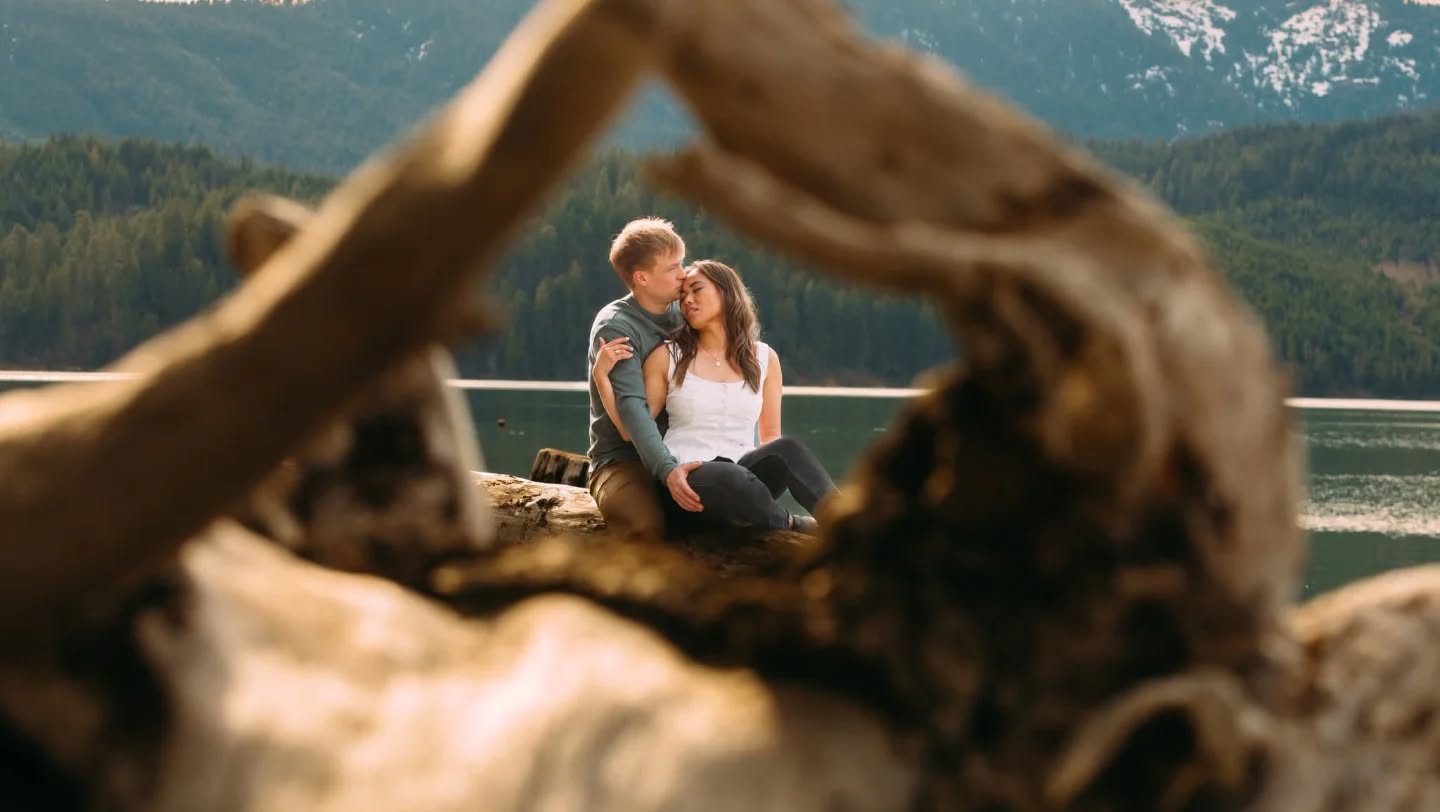
Direct, harsh sunlight creates problems that most couples don’t think about. It causes squinting. It creates dark shadows under eyes, noses, and chins. It makes people look washed out if they’re in full sun, or creates distracting contrast between people in sun and shade. Overcast skies act as a giant softbox — the clouds diffuse the light evenly, so skin tones are smooth, colors are rich, and no one is squinting into the sun during their ceremony.
Rain itself can be a beautiful visual element in photos. Backlit rain drops look ethereal. A couple sharing an umbrella and laughing creates images that are more genuine and dynamic than a posed portrait in perfect conditions. Some of the most emotional, authentic moments we’ve ever documented happened because rain forced everyone to stop worrying about perfection and just be present.
That said, not all rain is photographable. Heavy, driving rain combined with wind and cold temperatures creates real challenges. Equipment needs protection, guests are miserable, and the couple can’t comfortably spend time outdoors for portraits. This is where the decision point we mentioned earlier becomes critical — the difference between “a little drizzle that makes for moody, gorgeous photos” and “genuinely bad conditions” is something your photographer should help you evaluate.
One thing we always tell our couples: we weather-seal our gear, we carry protective equipment, and we have documented weddings in every weather condition western Washington can throw at us. Your photographer should be able to say the same. If they can’t, that’s worth knowing before you book. Seriously – check their contract too – we know of a local photographer who has a clause that states they won’t photograph if it’s raining, even on your wedding day (yikes!).

Common Rain Plan Mistakes (We’ve Seen Them All)
Not having a rain plan at all. This is more common than you’d think, especially for July and August weddings. “It won’t rain” is not a plan. It’s a prayer. And prayers, while powerful in many contexts, do not control Pacific Northwest weather patterns.
Making the decision too late. We’ve seen couples wait until the morning of their wedding to decide, and by then it’s a scramble. Vendors need notice to adjust. Chairs need to be moved. Guests need to be redirected. Making the call 48-72 hours out gives everyone time to execute smoothly.
Assuming the venue will handle everything. Your venue has a rain plan for their space, but they may not handle all the details — who moves the chairs, who communicates to guests, who adjusts the timeline. If you don’t have a day-of coordinator, assign specific rain-plan tasks to specific people.
Forgetting about the ground. Even if the rain stops two hours before your ceremony, the ground is still wet. Guests’ shoes, chair stability, the train of your gown — all affected. Have a plan for ground conditions, not just sky conditions.
Over-planning to the point of anxiety. Here’s the balance: have a solid plan, then let it go. You cannot control the weather. You can control your response to it. Every single couple we’ve worked with who got rained on and rolled with it has told us afterward that it barely mattered. The wedding happened. The love was there. The rain became part of the story.


A Quick Rain Plan Checklist
Before you close this tab, here’s what you need to have locked down:
One, confirm your venue’s rain backup space and get the details in writing. Two, buy clear bubble umbrellas — at least 8-12 for the wedding party and immediate family. Three, establish your decision timeline with your coordinator or point person. Four, talk to your photographer about rain portrait locations near your venue. Five, brief your wedding party on what changes if it rains. Six, prepare a guest communication plan (wedding website update, group text chain, etc.). Seven, confirm all vendors know the rain plan and who to contact for updates. Eight, assemble a rain kit: towels, garment steamer, extra hairspray, blotting papers, waterproof shoes. Nine, budget for potential rain-related extras: tent, heaters, flooring, covered shuttle from parking.
The Pacific Northwest is one of the most beautiful places in the world to get married. The lush greenery, the dramatic skies, the way light filters through clouds and trees — that’s all because of the rain. Your wedding doesn’t happen in spite of PNW weather. It happens within it. And when you plan for it, you get to enjoy every moment instead of white-knuckling through the forecast.
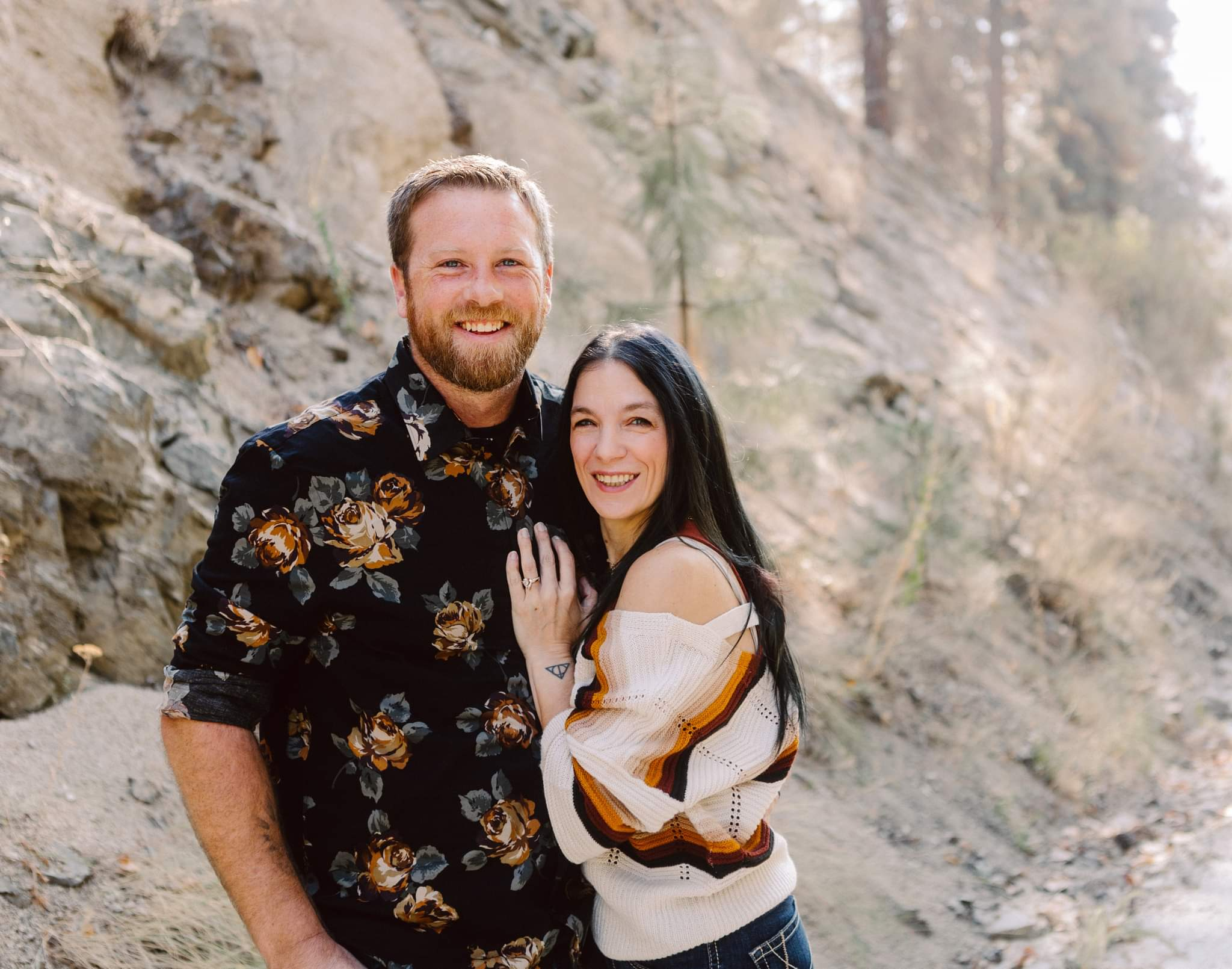
We’re Kate and Josh of GSquared Weddings, and we’ve been documenting love stories across Snohomish County and the greater Seattle area for over 15 years. If you want a photography team that knows how to work in literally any PNW weather condition (and actually prefers the moody light), we’d love to hear from you.